Walkways are one of the most frequently used—and often overlooked—features of any property. Whether they connect your driveway to your front door or wind through your garden, they play a key role in both function and curb appeal. Yet many homeowners find themselves puzzled by a common issue: their walkways start to look uneven, worn, or aged even when the underlying structure is perfectly sound.
Before you assume costly repairs or replacement are necessary, it’s important to understand that what you’re seeing is often a visual problem, not a structural one. In many cases, the walkway hasn’t shifted, cracked, or sunk in any meaningful way—it just appears that way due to surface-level changes.
This article breaks down why that happens, how to tell the difference between real damage and visual distortion, and what you can do to restore your walkway’s clean, even appearance.
The Difference Between Structural and Visual Problems
Let’s start with the most important distinction.
Structural Issues
Structural problems involve actual changes in the physical integrity of the walkway. These include:
- Cracks that run deep through concrete or pavers
- Sections that have sunk or lifted due to soil movement
- Loose or unstable stones
- Drainage issues causing erosion beneath the surface
These problems require repair or reconstruction.
Visual Issues
Visual issues, on the other hand, are surface-level. They don’t affect how the walkway functions but can make it look:
- Uneven
- Discolored
- Older than it really is
- Poorly maintained
Most homeowners misinterpret visual problems as structural ones, leading to unnecessary worry—and sometimes unnecessary expenses.
Why Walkways Start Looking Uneven
Even when your walkway is perfectly level, a range of environmental and usage-related factors can create the illusion of unevenness.
1. Uneven Staining and Discoloration
One of the most common causes is uneven staining.
Over time, different parts of your walkway are exposed to different conditions:
- Some areas get more sunlight
- Others stay damp longer
- Certain spots collect leaves or debris
This leads to inconsistent coloration. For example:
- Darker patches may form where moisture lingers
- Lighter areas may appear where the surface is more exposed
- Organic stains from leaves can create blotchy patterns
When the human eye sees inconsistent tones, it often interprets them as changes in elevation—even when the surface is flat.
2. Dirt and Grime Accumulation
Dirt doesn’t settle evenly.
Foot traffic, wind patterns, and water flow all influence where debris accumulates. Over time:
- High-traffic areas may look cleaner due to constant use
- Edges and corners may collect more grime
- Low spots may appear darker due to trapped dirt
This uneven buildup creates a patchwork effect that tricks the eye into seeing dips and rises.
3. Joint Buildup Between Pavers
If your walkway is made of pavers or stones, the joints between them play a major role in how even the surface appears.
Over time, joints can fill with:
- Dirt
- Moss
- Weeds
- Organic debris
When some joints are clean and others are filled, it creates visual inconsistency. Filled joints may appear raised or darker, making adjacent pavers look lower—even if they’re perfectly level.
4. Moss, Algae, and Organic Growth
Moist environments encourage the growth of:
- Moss
- Algae
- Lichen
These tend to grow unevenly, often in shaded or damp areas. The result is:
- Green or dark patches
- Slippery textures
- Uneven visual patterns
Because these growths are often thicker in certain areas, they can create the illusion of surface variation.
5. Water Runoff Patterns
Rainwater doesn’t flow uniformly across your walkway.
Instead, it follows natural paths based on:
- Slight grading
- Surrounding landscaping
- Surface texture
Over time, these patterns can cause:
- Mineral deposits (white streaks or patches)
- Dirt trails
- Washed-out areas
These lines and streaks break up the visual continuity of the surface, making it appear uneven.
6. Shadow and Lighting Effects
Lighting plays a surprisingly large role in how surfaces are perceived.
Shadows from:
- Trees
- Railings
- Nearby structures
can create contrast across the walkway. When combined with staining or dirt, these shadows exaggerate differences in tone and texture, making flat surfaces appear irregular.
7. Aging Sealants and Surface Wear
If your walkway has been sealed, the sealant may wear off unevenly over time.
This can lead to:
- Glossy areas next to dull ones
- Color variations
- Increased susceptibility to staining in certain spots
Again, the result is visual inconsistency—not structural damage.
Why the Illusion Feels So Convincing
Humans rely heavily on visual cues to judge surfaces. When we see:
- Color differences
- Texture changes
- Irregular patterns
our brains interpret them as changes in height or depth.
This is why a perfectly flat walkway can look:
- Warped
- Sunken
- Poorly installed
even when it’s structurally sound.
How to Tell If It’s Actually a Structural Problem
Before taking action, it’s worth checking whether the issue is truly structural.
Here are a few simple ways to assess your walkway:
1. Use a Straight Edge
Place a long, straight object (like a level or board) across the surface. If it sits evenly, your walkway is likely fine.
2. Look for Movement
Step on different sections. If nothing shifts or feels unstable, the structure is intact.
3. Check for Deep Cracks
Surface cracks are common and often harmless. Deep, widening cracks may indicate structural issues.
4. Observe Water Drainage
After rain, check for pooling water. Minor puddles are normal, but significant pooling could indicate grading problems.
In most cases, homeowners discover that the issue is purely visual.
Simple Ways to Restore a Uniform Appearance
Once you’ve determined that your walkway is structurally sound, the goal becomes restoring visual consistency.
1. Thorough Cleaning
A deep clean can dramatically improve the look of your walkway by removing:
- Dirt
- Stains
- Organic growth
- Joint buildup
This alone can eliminate the uneven appearance in many cases.
2. Joint Maintenance
For paver walkways:
- Remove debris from joints
- Refill with fresh sand if needed
- Remove weeds and moss
Clean, consistent joints make a big difference in overall appearance.
3. Address Organic Growth
Treat moss and algae using appropriate cleaners. Removing these not only improves appearance but also reduces slipping hazards.
4. Resealing (If Applicable)
If your walkway was previously sealed:
- Reapplying sealant can restore uniform color and finish
- It also helps prevent future staining
5. Manage Surrounding Conditions
Reduce future buildup by:
- Trimming overhanging trees
- Improving drainage
- Sweeping regularly
Where Pressure Washing Fits In
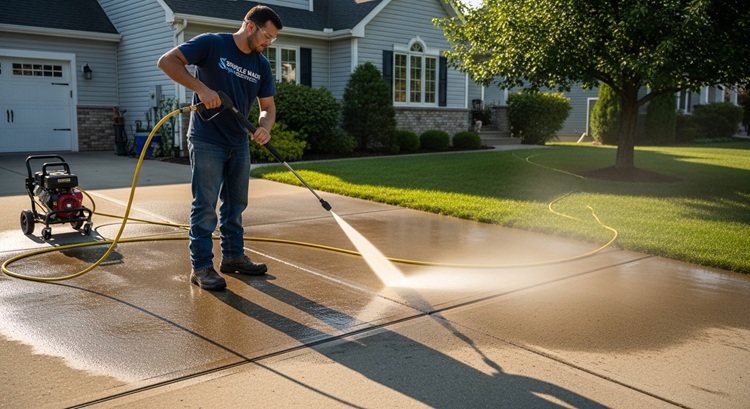
While this article focuses on understanding the problem rather than promoting a specific solution, it’s worth noting that pressure washing can be an effective corrective step when visual issues are caused by buildup and staining.
A properly executed cleaning can:
- Remove years of dirt and grime
- Even out surface coloration
- Restore the original look of materials
Homeowners often notice that what looked like uneven or aging surfaces suddenly appear clean, level, and well-maintained again.
For those considering professional help, many turn to the best pressure washing services in Columbia to handle stubborn buildup and restore consistency without damaging the surface.
Why DIY Cleaning Sometimes Falls Short
It’s tempting to handle cleaning yourself, but there are a few challenges:
- Uneven pressure can create streaks
- Incorrect techniques can damage surfaces
- Incomplete cleaning may leave patchy results
This can actually make the walkway look more uneven.
That’s why some homeowners opt for experienced providers, such as the best pressure washing services in Columbia, to ensure a consistent and effective result.
Long-Term Prevention Tips
Keeping your walkway looking even over time doesn’t require constant effort, but a few habits go a long way:
Regular Sweeping
Prevents debris from accumulating and causing stains.
Seasonal Cleaning
A thorough clean once or twice a year helps maintain consistency.
Prompt Stain Removal
Address spills, leaf stains, and organic buildup quickly.
Proper Drainage
Ensure water flows away from the walkway to avoid uneven staining.
When You Should Consider Repairs
While most uneven-looking walkways are visually affected rather than structurally damaged, there are times when repairs are necessary.
Consider professional evaluation if you notice:
- Significant height differences between sections
- Large, expanding cracks
- Persistent water pooling
- Loose or shifting materials
In these cases, cleaning alone won’t solve the problem.
Final Thoughts
It’s easy to assume the worst when your walkway starts looking uneven, but in many cases, the issue is far less serious than it appears.
Staining, dirt accumulation, joint buildup, and environmental factors can all distort the way your walkway looks—without affecting its structural integrity. Understanding this distinction can save you time, money, and unnecessary stress.
Often, the solution isn’t rebuilding—it’s restoring.
By addressing surface-level issues and maintaining a consistent appearance, you can bring your walkway back to life and preserve its function and beauty for years to come. And if buildup has already taken its toll, consulting the best pressure washing services in Columbia can be a practical step toward achieving a cleaner, more uniform look without jumping straight to costly repairs.
In the end, a walkway that looks uneven isn’t always one that is uneven—and knowing the difference makes all the difference.